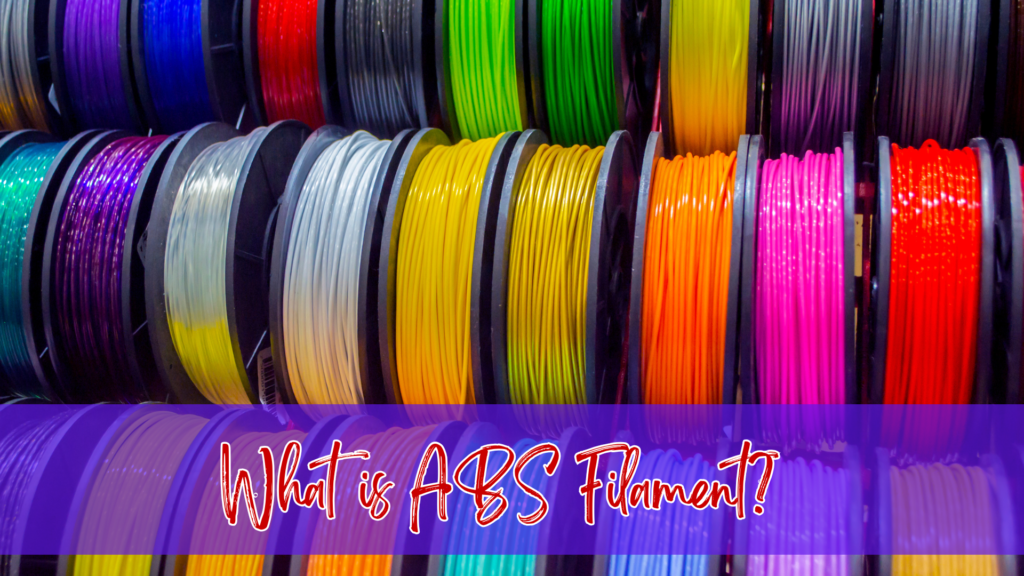
ABS filament is one of the most talked-about materials in 3D printing. It is strong, durable, and used in everything from toys to car parts.
This guide will explain what ABS filament is, why it is popular, and when you should use it. Keep reading to discover practical tips, comparisons, and answers to the most common questions.
What is ABS Filament?
ABS filament stands for Acrylonitrile Butadiene Styrene. It is a type of plastic commonly used in 3D printing and in everyday products like LEGO bricks, car dashboards, and protective helmets.
People like ABS filament because it is strong, durable, and resistant to heat. It makes prints that can handle more wear and tear compared to other beginner-friendly materials like PLA.
Key Properties of ABS Filament
Before using ABS, it helps to know what makes it different. These key properties explain why it is widely chosen for functional 3D prints.
✅ Strength and toughness: ABS is less brittle than PLA and can withstand more impacts.
✅ Heat resistance: It can handle higher temperatures without softening.
✅ Flexibility: It bends slightly before breaking, making it great for mechanical parts.
✅ Smooth finish: Prints can be polished, sanded, or treated with acetone for a glossy look.
Pros and Cons of ABS Filament
When asking “what is ABS filament,” it is smart to weigh the good and the bad.
Advantages of ABS Filament
✅ Stronger and more durable than PLA.
✅ Handles heat better, making it useful for outdoor or mechanical parts.
✅ Easy to sand, paint, and smooth for a professional look.
✅ Affordable and widely available.
Disadvantages of ABS Filament
✅ Can warp or crack during printing if not handled properly.
✅ Gives off styrene fumes, which can irritate the eyes and respiratory system.
✅ More challenging for beginners compared to PLA.
ABS Filament vs Other Popular Filaments
Choosing the right filament can be confusing. This table shows how ABS compares to PLA, PETG, and TPU so you can quickly see the strengths of each.
Feature
ABS Filament
PLA Filament
PETG Filament
TPU Filament
Strength
Strong and tough
Moderate, more brittle
Strong with good impact resistance
Flexible strength
Heat Resistance
High, resists heat well
Low, softens easily
Medium to high
Medium
Ease of Printing
Harder, prone to warping
Very easy, beginner-friendly
Easier than ABS, less warping
More advanced, requires tuning
Flexibility
Rigid
Rigid
Slight flexibility
Very flexible and rubber-like
Surface Finish
Smooth, polishable with acetone
Matte or glossy, limited post-processing
Glossy and smooth
Soft, rubbery finish
Best Use Cases
Functional parts, enclosures, mechanical items
Beginner projects, decorative models
Durable parts, outdoor use, balance of strength and printability
Phone cases, gaskets, wearables
When Should You Use ABS Filament?
ABS filament is best for projects that need strength and durability. It is often used for mechanical parts, enclosures, and items that face stress or heat.
How to Print Successfully with ABS Filament
Printing with ABS requires a bit more setup than PLA. With the right conditions, you can avoid common issues like warping.
✅ Use a heated bed to keep prints from lifting.
✅ An enclosed chamber helps maintain stable temperatures.
✅ Set nozzle temperatures around 220 to 250°C depending on the brand.
✅ ABS does not absorb moisture as quickly as nylon or PETG, but drying it before printing can still improve consistency and reduce issues if the filament has been exposed to humidity.
Is ABS Filament Safe to Use?
Safety is an important part of learning what ABS filament is. While it is safe to handle, printing with it requires care.
ABS releases styrene fumes when heated, which can irritate the eyes and respiratory system. For safety, always print in a well-ventilated area or with proper filters.
ABS is also not FDA-approved for food contact, so it should not be used for cups, plates, or utensils.
Environmental Impact of ABS Filament
ABS filament is not biodegradable, which makes it less eco-friendly than PLA. It can take many years to break down in the environment.
If sustainability is your main concern, PLA or other eco-friendly filaments may be better choices. However, if you need durability, consider reinforced options like ABS-GF or ABS-CF, which extend the lifespan of prints and reduce waste over time.
Best Alternatives to ABS Filament
Sometimes ABS is not the best fit for your project. Here are a few alternatives to consider.
✅ PETG: A middle ground between strength and printability. PETG-CF version improves stiffness, reduces warping, and provides a professional matte finish.
✅ PLA: Easy to use and eco-friendly (under industrial composting), great for beginners.
✅ Nylon: Very strong and durable, but more advanced to print.
✅ ASA: Similar to ABS but with better UV resistance. If you need outdoor durability, check out ASA-GF, which combines ASA’s weather resistance with glass fiber reinforcement.
Conclusion
Now you know the answer to “what is ABS filament” and why it continues to be a favorite in 3D printing. ABS offers strength, durability, and heat resistance, making it perfect for functional and mechanical parts.
For even better results, explore advanced variations like ABS-GF, ABS-CF, and ABS-CF Core, which provide greater strength, stiffness, and reliability.
❓Frequently Asked Questions About What is ABS Filament
Can you mix PLA and ABS?
Mixing PLA and ABS is not recommended because they have different printing temperatures and properties. The two materials often do not bond well together. This can lead to weak prints or failed results.
What is TPU filament?
TPU filament is a flexible material used in 3D printing. It is known for its rubber-like stretch and durability. TPU is often used for phone cases, gaskets, and wearable items.
What is the best 3D printer filament?
The best filament depends on your project needs. PLA is great for beginners and simple models, ABS works well for strong parts, and PETG offers a balance of both. If you want to step up from standard PETG, consider PETG-CF for added strength and a matte finish. Specialty filaments like nylon, TPU, or ASA-GF are best for advanced users with specific goals.
What does PETG stand for?
PETG stands for Polyethylene Terephthalate Glycol. It is a modified version of PET plastic that is stronger and easier to print. PETG is popular for its toughness and resistance to impact.
If you have ever searched for strong, weather-resistant 3D printing materials, you have probably come across ASA filament.
This material is known for its toughness and outdoor durability, but what exactly makes it special?
In this guide, we will explore ASA filament properties in detail, compare it to other popular filaments, and share tips to help you succeed with it.
ASA is one of those materials that can truly unlock new possibilities for your projects. Keep reading to discover all about ASA filament properties and how they can improve your 3D printing results.
What is ASA Filament?
ASA filament, short for Acrylonitrile Styrene Acrylate, is a thermoplastic material developed as an improved version of ABS. It has similar strength but adds better resistance to sunlight and weather conditions.
This makes ASA a favorite for outdoor parts, automotive components, and functional prototypes.
Key ASA Filament Properties That Make It Stand Out
ASA filament properties are what set it apart from other materials. Below are the most important features you should know before choosing it for your projects.
Strength and Durability
ASA is strong and impact resistant, making it a reliable choice for functional parts. It can handle stress and pressure without breaking easily.
UV and Weather Resistance
One of ASA’s biggest advantages is its ability to resist sunlight and weather damage. Unlike ABS, it does not yellow or weaken when exposed to UV light.
Heat Resistance
ASA can withstand higher temperatures than PLA and PETG, with a heat deflection temperature around 95–100°C. This makes it suitable for parts exposed to warm environments, though it is not as heat resistant as materials like Nylon or Polycarbonate.
Surface Finish and Appearance
ASA prints with a smooth, matte finish that looks professional. It can also be sanded or painted for a polished final look.
Chemical Resistance
ASA resists water, salts, and many chemicals. This makes it a great choice for outdoor equipment and automotive parts.
ASA Filament vs Other Popular Filaments
When choosing a 3D printing material, it helps to compare ASA filament properties with other common options.
The table below highlights the key differences in strength, durability, ease of use, and best applications.
Property / Feature
ASA Filament
PLA Filament
PETG Filament
ABS Filament
Strength & Durability
Strong and impact resistant
Moderate strength, brittle under stress
Good strength with some flexibility
Strong but more prone to cracking
UV & Weather Resistance
Excellent, resists sunlight and outdoor conditions
Poor, degrades in sunlight
Fair, better than PLA but not as good as ASA
Poor, yellows and weakens in sunlight
Heat Resistance
High, stable in warm environments
Low, softens at lower temps
Medium, better than PLA but less than ASA
High, similar to ASA
Ease of Printing
Moderate difficulty, requires heated bed and enclosure
Very easy, beginner-friendly
Easy to moderate, less warping than ASA/ABS
Difficult, prone to warping
Surface Finish
Smooth, matte, professional look
Glossy finish, easy to print cleanly
Glossy and clear, less matte than ASA
Smooth but not UV stable
Best Applications
Outdoor parts, automotive, functional prototypes
Decorative items, beginner prints, low-stress parts
Functional indoor parts, flexible connectors
Industrial parts, prototypes, indoor applications
This comparison shows that ASA is the top choice for outdoor and high-performance projects. While PLA and PETG are easier to print, ASA and ABS provide greater durability, with ASA offering the best balance of strength and weather resistance.
Tip: If you’re interested in PETG but want something stronger, check out our FibreHeart PETG-CF HF filament. It shares many of PETG’s properties but adds a matte finish, greater hardness, and reduced warping thanks to carbon fiber reinforcement.
Similarly, if you’re considering ABS, we stock advanced options such as ABS-GF, ABS-CF, and ABS-CF Core, which improve on standard ABS with better strength, reduced warping, and enhanced performance.
Printing with ASA Filament: What You Need to Know
Printing with ASA requires some preparation, but the results are worth it. Understanding the right settings and challenges will help you succeed.
Ideal Print Settings
Most ASA filaments print best at nozzle temperatures between 240°C and 260°C. A heated bed of 90°C to 110°C is recommended, and using an enclosure helps reduce warping.
Common Challenges and How to Solve Them
ASA can warp if not printed in a controlled environment. Using adhesives, a heated chamber, and proper bed leveling can reduce this issue.
Is ASA Hard to Print?
ASA was developed as a replacement for ABS. It offers similar strength and much better UV resistance, but it still requires careful settings and an enclosure to reduce warping.
Best Applications for ASA Filament
ASA filament properties make it perfect for outdoor and functional parts. It is widely used in industries and hobby projects alike.
Outdoor signage and fixtures
Automotive parts and accessories
Outdoor enclosures and housings
Functional mechanical prototypes
For projects that demand even more toughness, our ASA-GF filament is a great choice. It combines ASA’s weather resistance with glass fiber reinforcement for extra rigidity and stability.
Pros and Cons of ASA Filament
Like any material, ASA has both strengths and weaknesses. Knowing both will help you decide if it is right for your project.
Benefits of ASA Filament
High strength and durability
Excellent UV and weather resistance
Professional matte finish
Good chemical resistance
Disadvantages of ASA Filament
More difficult to print than PLA or PETG
Requires a heated bed and enclosure
Higher cost compared to basic filaments
Is ASA Filament Worth It?
ASA filament is worth it if you need durable, weather-resistant parts. It may not be the easiest filament to print, but the results are long-lasting and professional.
For hobbyists, ASA is a step up from PLA or PETG. For professionals, it is a reliable choice for outdoor and engineering-grade applications.
If you want to maximize ASA’s performance, try our FibreHeart ASA-GF filament designed for high-performance, outdoor-ready applications.
Conclusion
ASA filament properties make it one of the best materials for outdoor and high-performance 3D printing. Its strength, UV resistance, and durability give it a clear edge over PLA and PETG in many applications.
If you want more helpful guides and tips on choosing the right 3D printing filament, turn to Siraya.
Frequently Asked Questions About ASA Filament Properties
Does ASA filament warp easily?
Yes, ASA can warp if printed without proper settings. This happens because the material contracts as it cools, pulling the print off the bed. Using a heated bed, enclosure, and good adhesion methods can greatly reduce warping.
Is ASA more brittle than PLA?
No, ASA is generally tougher and less brittle than PLA. PLA tends to snap under pressure, while ASA can absorb more impact before breaking. This makes ASA a better choice for functional parts that need to handle stress.
What is the best thing to print with ASA filament?
The best projects for ASA include outdoor signage, automotive parts, and functional prototypes. These prints benefit from ASA’s weather resistance and strength. Anything that needs to withstand sunlight, heat, or rough use is a good match for ASA.
Is ASA filament good for car parts?
Yes, ASA is commonly used for car parts because it can handle heat and exposure to the elements. It resists chemicals and sunlight better than many other filaments. This makes it a dependable option for both interior and exterior automotive applications.
Choosing the right 3D printing filament can feel tricky, especially when comparing ASA vs PLA. Both materials are popular, but they serve very different needs.
In this guide, we will break down everything you need to know so you can make the best choice for your projects.
Keep reading to discover which filament fits your goals.
What is PLA Filament?
PLA, or Polylactic Acid, is one of the most common filaments used in 3D printing. It is made from renewable resources like corn starch or sugarcane, making it more sustainable than many petroleum-based plastics.
Features of PLA:
✅ Prints at lower temperatures without much setup
✅ Smooth, glossy surface finish with many color options
✅ Minimal warping and no need for an enclosed printer
Best for:
✅ Beginners learning 3D printing basics
✅ Decorative models, toys, and prototypes
✅ Classrooms and home printing setups
Why try it: PLA is affordable, easy to use, and widely available. While it is sometimes marketed as biodegradable, in reality, PLA only breaks down under industrial composting conditions with high heat and controlled environments, not in home compost bins or landfills.
This makes it eco-friendlier than most plastics, but it should still be disposed of responsibly.
What is ASA Filament?
ASA, or Acrylonitrile Styrene Acrylate, is a thermoplastic designed for strength and outdoor durability. Unlike PLA, it can handle sunlight, heat, and weather without breaking down.
Features of ASA:
✅ Strong, impact-resistant, and long-lasting
✅ Excellent UV and heat resistance for outdoor use
✅ Matte finish that hides layer lines and can be sanded or painted
Best for:
✅ Outdoor parts and functional tools
✅ Automotive components and prototypes
✅ Projects requiring strength and weather resistance
Why try it: ASA is tougher than PLA and built to last in challenging environments. If you want prints that can handle real-world use, ASA is a smart choice.
ASA vs PLA: Side-by-Side Comparison
ASA vs PLA is best understood by looking at their differences in one place. This table highlights strength, durability, ease of use, and more so you can quickly see which filament fits your needs.
Feature
PLA Filament
ASA Filament
Strength
Brittle and less impact-resistant
Tough and impact-resistant
Heat Resistance
Softens at low heat
Withstands higher temperatures
UV Resistance
Poor, degrades in sunlight
Excellent, built for outdoor use
Ease of Printing
Very easy, beginner-friendly
Harder, needs enclosure and higher temps
Finish
Glossy and smooth
Matte, hides layer lines better
Safety
Minimal fumes, eco-friendly
Gives off fumes, needs ventilation
Cost
Cheaper, widely available
More expensive, less common
Best Use
Decorative items, prototypes, toys
Outdoor parts, automotive, functional tools
When to Use PLA and ASA
Choosing between PLA and ASA depends on the type of project you are working on. PLA is perfect for simple, decorative, or indoor applications, while ASA shines in demanding, outdoor, and functional roles.
✅ Use PLA when:
You are new to 3D printing and want an easy-to-use filament.
You are making decorative models, prototypes, or toys.
You need a low-cost option for classroom or hobby projects.
✅ Use ASA when:
You need durable parts that can withstand heat, sunlight, or weather.
You are creating outdoor tools, automotive parts, or functional prototypes.
You want a professional finish with strong, long-lasting performance.
Tip: For even more strength, consider ASA-GF, which adds glass fiber reinforcement to standard ASA.
This simple rule of thumb: choose PLA for learning and indoor projects, and ASA (or ASA-GF) for real-world, outdoor, or high-strength applications.
Printing Tips for ASA and PLA
Printing PLA is simple. It works at lower temperatures, usually does not need a heated bed, and sticks well to many surfaces.
Beginners can get good results without much effort, making it the easiest material for first-time users.
ASA, however, requires more preparation. To get the best results:
✅ Use an enclosed printer to maintain stable temperatures and reduce warping.
✅ Apply bed adhesives to improve first-layer sticking.
✅ Dry ASA before printing to prevent moisture-related issues.
Taking these extra steps ensures ASA prints come out strong and reliable.
Common Mistakes to Avoid
It is easy to run into problems if you use the wrong material for the wrong job. One common mistake is choosing PLA for outdoor projects. While it is easy to print, it cannot handle heat or sunlight and will lose strength quickly.
Another mistake is printing ASA without proper conditions. To avoid issues:
✅ Always use ventilation to reduce exposure to fumes.
✅ Prepare the print bed with adhesives to prevent warping.
✅ Dry the filament before use for stronger layer bonding.
Planning ahead and setting up your printer correctly will help you avoid these problems and get the most from both filaments.
Conclusion
When comparing ASA vs PLA, the decision comes down to your project needs. PLA is easy, affordable, and great for beginners, while ASA is strong, durable, and perfect for outdoor or functional parts.
For even better performance, explore ASA-GF, ABS-GF, ABS-CF, and ABS-CF Core filaments, which enhance strength, durability, and printability compared to their standard counterparts.
For more helpful guides and tips on choosing the right 3D printing filament, visit Siraya. And do not forget to shop Siraya ASA, TPU, PPA, and other high-quality filaments for your next printing project.
Frequently Asked Questions About ASA vs PLA
What is the best thing to print with ASA?
ASA is best for outdoor parts, automotive components, and functional prototypes. It is especially strong in projects that need to resist sunlight, heat, or weather. These qualities make ASA a go-to choice for practical prints.
Does ASA filament give off fumes?
Yes, ASA does release noticeable fumes during printing. Good ventilation or an enclosed printer setup is recommended when working with ASA. This helps keep your workspace safe and comfortable.
Is ASA more brittle than PLA?
No, ASA is generally less brittle than PLA. While PLA can snap under stress, ASA has better impact resistance. This makes it more reliable for functional parts.
Does ASA need bed adhesive?
Yes, bed adhesive can help ASA stick better to the print surface. Without it, ASA is more likely to warp or lift during printing. Many users rely on adhesives like glue sticks or specialized sheets.
Is ASA as strong as PETG?
ASA and PETG are both strong, but they excel in different areas. ASA is more resistant to UV and weather, while PETG is easier to print and has excellent layer adhesion. If you’re looking for a PETG alternative, consider PETG-CF, which shares many of PETG’s properties but adds a matte finish, greater hardness, and reduced warping.
What kind of glue do you use for ASA prints?
ASA prints can be glued with common plastic adhesives or superglue. Sanding the surfaces before gluing can improve the bond. Some users also use solvents for stronger chemical welding.
If you want to create 3D prints that bend, stretch, or feel rubbery, flexible filaments are the way to go.
These materials let you design parts that rigid plastics like PLA or ABS cannot handle. From phone cases to gaskets, flexible filament types give you more creative freedom.
Read on to explore the different types, how they compare, and how to choose the right one for your next project.
What Are Flexible Filaments and Why Do They Matter?
Flexible filaments are special 3D printing materials that can bend, twist, or stretch without breaking. They are sometimes called “soft” or “bendy” filaments because of their rubber-like feel.
They matter because they allow you to make parts that can absorb shock, fit snugly, or feel comfortable in your hand.
Whether it is a toy, a wearable, or a machine part, flexible filament types open up endless possibilities.
Main Types of Flexible Filament
Not all flexible filaments are the same. Here are the most common types, explained in a simple way so you know exactly what to expect.
✨ TPU (Thermoplastic Polyurethane) – The Most Popular Choice
TPU is the most widely used flexible filament and is known for its balance of stretch and durability. It comes in different hardness levels, which makes it adaptable to many projects.
Features: Durable, elastic, available in different hardness levels (85A, 95A) Best For: Phone cases, hinges, protective gear, and wearables Why Try It: TPU is the most versatile flexible filament, giving you a strong balance of stretch and toughness.
✨ TPE (Thermoplastic Elastomer) – Soft and Stretchy
TPE is a family of flexible plastics that includes TPU. In 3D printing, though, TPU and TPE are usually treated as separate options because TPU is tougher and easier to print, while TPE blends are softer and more rubber-like.
Features: Feels like rubber, very elastic, softer than TPU Best For: Grips, seals, toys, and flexible joints Why Try It: TPE offers maximum softness and stretch, making it perfect for squishy or comfort-focused prints.
✨ Flexible PLA – Beginner-Friendly Flexibility
Flexible PLA is a modified version of PLA that adds some bendability. It is the easiest flexible filament to print, making it great for beginners.
Features: Modified PLA with mild flexibility, easy to print Best For: Learning flexible printing, simple bendable parts, prototypes Why Try It: Flexible PLA is the easiest way to try flexible printing without frustration.
✨ PETG – Semi-Flexible and Strong
PETG is not as flexible as TPU or TPE, but it offers a nice mix of strength and slight bendability. It is often chosen for functional parts that need toughness.
Features: Strong, impact-resistant, slightly bendable Best For: Mechanical parts that need durability with a little give Why Try It: PETG is a great middle ground if you want strength with some flexibility, especially for functional parts.
✨ Nylon – Strong and Slightly Flexible
Nylon is known for its toughness and resistance to wear. While not as flexible as TPU, it still provides a good level of bendability.
Features: Tough, wear-resistant, semi-flexible, absorbs moisture easily Best For: Functional prototypes, gears, and parts under stress Why Try It: Nylon is a powerhouse material that combines strength with just enough flexibility to handle demanding jobs.
✨ ASA – Weather-Resistant with Mild Flexibility
ASA is similar to ABS but with better UV resistance. It is a good option for outdoor projects that need to handle sunlight and weather.
Features: UV-resistant, strong, similar to ABS but more outdoor-friendly Best For: Outdoor parts, enclosures, and weather-exposed components Why Try It: ASA is the ideal choice when you need mild flexibility combined with weather resistance.
Comparing Flexible Filament Types Side by Side
With so many flexible filament types, it helps to see them compared directly. This table shows flexibility, ease of printing, durability, and best uses.
Filament Type
Flexibility Level
Ease of Printing
Durability
Best Uses
TPU
High (varies by hardness grade)
Moderate (slower speeds needed)
Very durable
Phone cases, hinges, wearables
TPE
Very High (softest, rubber-like)
Hard (stringing and slow prints)
Durable but tricky to print
Grips, seals, toys
Flexible PLA
Medium (mild flexibility)
Easy (beginner-friendly)
Moderate
Prototypes, simple bendable parts
PETG
Low to Medium (semi-flexible)
Moderate
Strong and impact-resistant
Functional parts, semi-flexible components
Nylon
Medium (slight flex, very tough)
Hard (moisture sensitive)
Extremely durable
Gears, stress-bearing parts
ASA
Low to Medium (mild flexibility)
Moderate
Strong and UV-resistant
Outdoor parts, enclosures
If you want the softest and squishiest, TPE is your best bet. For the most balanced option, TPU is the winner. And if you need outdoor durability, ASA is the way to go.
How to Choose the Right Flexible Filament for Your Project
The best flexible filament depends on what you need your print to do. Think about flexibility, strength, environment, and ease of printing.
✅ For maximum softness and squish: Choose TPE.
✅ For balance of strength and stretch: TPU is the most reliable.
✅ For easy learning: Flexible PLA is the beginner’s friend.
✅ For outdoor projects: ASA handles sunlight and weather best.
✅ For tough functional parts: Nylon is the strongest option.
✅ For semi-flexible durability: PETG works well for mechanical parts.
Common Printing Challenges with Flexible Filaments (and Fixes)
Flexible filaments can be tricky, but most problems have easy solutions. Here are the most common issues and how to handle them:
Stringing and oozing: Reduce retraction settings and print slower.
Poor bed adhesion: Use a heated bed, glue stick, or tape for better grip.
Filament jamming: A direct drive extruder works better than a Bowden setup.
Moisture problems: Keep filament dry in sealed containers with silica packs.
Slow print speeds: Accept that flexible filaments need slower speeds for best quality.
With these adjustments, you can avoid frustration and get smoother prints.
Safety and Handling of Flexible Filaments
Flexible filaments are generally safe, but good handling practices make a big difference. Always keep safety in mind when printing.
✅ Ventilation: Print in a well-ventilated room to avoid breathing fumes.
✅ Storage: Keep filaments sealed in bags or boxes with drying packs.
✅ Handling: Avoid touching hot nozzles or beds when adjusting prints.
✅ Moisture control: Dry your filament regularly if you live in a humid area.
These steps will keep your prints strong and your workspace safe.
Conclusion
Flexible filament types give you the freedom to create prints that are soft, bendable, and durable. From TPU to TPE, PETG, Nylon, and ASA, each one has its own strengths depending on your project goals.
Frequently Asked Questions About Flexible Filament Types
What filament is the most flexible?
TPE is usually the most flexible filament available. It can stretch and bend more than TPU or PLA-based options. If you need something that feels like rubber, TPE is the top choice.
Which is softer, TPU or TPE?
TPE is softer and feels more rubber-like, while TPU is tougher and holds its shape better under stress. TPU is technically a type of TPE, but in 3D printing they are usually marketed separately. If you want softness, TPE is better, but if you want strength and easier printing, TPU is the smarter choice.
What filament is bendy?
Several filaments are bendy, including TPU, TPE, and flexible PLA. TPU is the most common because it balances bendability with strength. Flexible PLA bends too, but not as much as TPU or TPE.
Is there a flexible PLA?
Yes, flexible PLA is available and is easier to print than TPU or TPE. It has mild flexibility, making it a good entry point for beginners. However, it is not as durable or stretchy as other flexible filaments.
Finding the best iPad 10th generation case depends on how you use your device. Some cases are slim and stylish, while others offer rugged protection for kids or travel. Look for extras like kickstands, Apple Pencil holders, or built-in screen protectors.
The 10th gen iPad has a unique size, so only cases made for it will fit properly. Many top picks feature tough TPU shells, silicone bumpers, and added touches like rotating hand straps or neck straps.
Whether you want everyday durability or portable convenience, there’s a well-designed case that fits your style, protects your screen, and makes life easier.
What’s Important in a Great Case
When you pick a case for your iPad 10th generation, focus on keeping it safe and easy to use. Protection from drops and scratches matters, but so do features like stands and Apple Pencil holders.
Keyboard support can make a big difference if you work or play on your iPad a lot.
Drop and Scratch Protection, Edge Safety
Your iPad 10th generation is a bit fragile, so it needs real protection. Look for cases with multi-layer protection and shock absorption—they’ll cushion your iPad when it takes a tumble.
Edges take the brunt of most drops. Go for cases with raised edges and reinforced corners to guard the screen and corners. Rugged cases usually nail edge safety, though they can get bulky.
Daily scratches? Annoying, but avoidable. Smooth, tough outer shells block scratches from keys or whatever else is in your bag. A case that wraps the whole iPad is a smart way to keep it scratch-free.
Stand Positions + Apple Pencil Storage + Auto Wake/Sleep
Multiple kickstand positions make your iPad more useful for watching, typing, or drawing. Adjustable stands let you find the right angle for whatever you’re doing.
If you have an Apple Pencil, check for a built-in Apple Pencil holder. It keeps your pencil safe, easy to grab, and charged when needed.
Not every case has storage, so double-check before buying.
Auto wake/sleep is another feature that’s hard to give up once you have it. Magnets turn the iPad screen off when you close the case and back on when you open it, saving battery and adding convenience.
Typing/Folding Support If You Use Keyboard Cases
If you type a lot, get a keyboard case that supports folding and steady typing. Look for backlit keyboards if you work in dim spaces.
The case should keep your iPad steady in a laptop-style position. Not all keyboard cases pull this off, but the good ones make typing and working way more comfortable.
Folding designs protect both iPad and keyboard when you’re not using them. They make it easy to switch between typing and using touch apps, so you’re not fumbling around. It really does make your iPad feel like a tiny laptop for work or school.
Best Cases for iPad 10th Generation That Deliver
Choosing the right case is all about balancing protection, style, and those little extra features. Some cases have built-in keyboards and pencil holders, while others focus on materials or flexibility.
These features make using your iPad smoother, whether you’re working, drawing, or just watching something.
1. Step Series Keyboard Case (10.9″ 10th Gen): Slim, Backlit, Pencil Holder
This case features a three-layer shock-absorbing shell and reinforced corners for robust drop protection.
The backlit keyboard offers seven LED colors and three brightness levels, which is ideal for night-time typing.
A built-in multi-touch trackpad supports iPadOS gestures, while the magnetic folio holds and charges your Apple Pencil.
Plus, strong cutouts and snug fit ensure your iPad is safe and accessible.
2. Cloud Series Keyboard Case (10th Gen 2022): Vegan Leather, Floating Stand
The Cloud Series keyboard case stands out with its vegan leather. It feels soft, looks sharp, and adds a bit of style. It’s also lightweight, so carrying your iPad doesn’t feel like a workout.
The floating stand lifts your screen a little, which actually improves how you see and use it. Adjusting the stand is simple, and it stays put when you’re typing or sketching.
Its 31-magnet Quick‑Set stand delivers a stable, floating screen ideal for typing or drawing. The keyboard connects via Bluetooth and offers quiet typing with just enough travel to feel right. Plus, the magnetic attachment lets you pop the keyboard on or off in seconds.
3. Step Series (11/10th Gen): Updated Folio, Dual-BT, Durable Typing
The updated Step Series folio works with both 10th and 11th Gen iPads, so you won’t need a new case if you upgrade. It connects through dual Bluetooth, letting you pair and switch between two devices easily.
Typing feels solid and comfortable, thanks to well-spaced keys that help cut down on mistakes. The folio folds back into a kickstand, which is handy for watching or showing off your screen.
This case gives you good edge protection and a secure fit. It even supports Apple Pencil charging, so you don’t have to pull out the pencil to charge it. The Step Series is a smart mix of protection and features for everyday use.
Compare and Choose Smartly
Picking the right case for your iPad 10th generation is all about protection, comfort, and extras that fit your routine. Think about the weight, keyboard support, and whether it keeps your Apple Pencil safe.
Protection vs Portability
If you’re always carrying your iPad or taking it outside, a rugged case—maybe from OtterBox—might be the smart move. These cases use tough shells and bumpers to guard against drops and scratches.
If you mostly use your iPad at home or work, you might want a slim case that doesn’t add much weight or bulk. Lightweight covers slip easily into bags and won’t slow you down.
Features like built-in screen protectors or water resistance add peace of mind. Just remember: tougher cases can get heavy and bulky fast.
Build and Feel: Keyboard, Backlight, Stand Stability
Plenty of cases have built-in keyboards, turning your iPad into a mini laptop. Check if the keyboard connects via Smart Connector or USB-C—Smart Connector keyboards don’t need charging, which is handy.
Pay attention to key travel and backlight. If you type a lot, these little details matter. Also, see how the case props up your iPad—sturdy, adjustable stands keep your screen steady for typing or streaming.
A stable stand stops wobbling or slipping, which you’ll really appreciate if you type or draw for hours. It’s one of those things you don’t notice until it’s missing.
Pencil Storage and Smart Features
If you use the Apple Pencil, storage is a must. Some cases come with dedicated holders or clips to keep your Pencil safe and charged.
Look for smart features like auto sleep/wake. It saves battery and lets you get started faster, no fussing with buttons.
Some cases add extras, like removable neck straps or rotating hand straps. They make your iPad easier to hold and use when you’re on the move.
If you want a mix of protection, style, and function, these features can really smooth out your daily routine.
What To Consider When Buying the Best Cases for iPad 10th Gen
Choosing the right case means checking how it fits your iPad, what it’s made of, and how well it protects against real-life bumps. Think about how the case holds up over time and whether it supports typing or watching videos comfortably.
Fit, Material, Hinge Strength, Sleep/Wake
Make sure the case fits the 10th generation iPad exactly. A snug fit stops the tablet from wobbling or slipping out.
Look for cases made of hard TPU for protection and soft silicone bumpers to absorb shocks. Check the hinge too—it should feel sturdy and hold the iPad in place when you open or close it.
Weak hinges can make covers flop or break after a while. Sleep/wake features are a bonus, automatically locking or waking the screen when you close or open the cover. Confirm the case supports this, so you’re not always pressing buttons.
And hey, color options can be fun. Some cases come in bright, kid-friendly colors, while others stick to classic or neutral tones.
Stand Angles, Keyboard Feel/Backlight (If Used)
Look for cases with adjustable stands that hold your iPad at more than one angle. This makes it easier to watch, type, or draw without straining.
If you use a keyboard, pick a case that feels good to type on and has a backlight—especially if you work in low light. Some cases even include an Apple Pencil holder, which keeps your stylus safe and handy.
Cases with a neck strap or rotating hand strap make carrying your iPad less awkward. They’re also helpful if you use your iPad while standing or walking around.
Choosing a case with these features makes your iPad easier to use and keeps it looking good, day after day.
Conclusion
Choosing the best case for your iPad 10th Gen means picking what fits your lifestyle.
Love typing? The Step Series offers full backlit customization (7 colors, 3 brightness levels), multi‑touch trackpad, dual Bluetooth pairing, and a top-mounted Pencil slot—all in a slim, drop-resistant shell.
Prefer a soft, classy feel? The Cloud Series delivers vegan-leather elegance, a 31-magnet floating stand, USB‑C charging, and quiet scissor keys with Bluetooth 5.2 for smooth typing anywhere. Both secure your iPad with auto sleep/wake and reinforced protection.
Frequently Asked Questions
Is it worth buying a 10th gen iPad?
The 10th generation iPad brings a bigger 10.9-inch screen and a faster A14 Bionic chip. It’s definitely a step up for school, work, or just watching videos compared to older models.
The design looks sleeker, but heads up—it doesn’t support the first-gen Apple Pencil. If drawing or jotting notes is your thing, that could be a dealbreaker.
If you want an iPad for everyday stuff and streaming, it’s a solid pick. But if you’re chasing pro-level speed for demanding apps, maybe check out the Air or Pro. For most people, though, this model balances price and features pretty well.
Is a soft or hard case better for an iPad?
Soft cases like silicone or TPU soak up shocks and feel grippy in your hands. They’re lighter, but honestly, they might not last as long if you’re rough on your gear.
Hard cases, usually made of plastic or polycarbonate, handle sharp impacts and drops better, though they can make your iPad a bit bulkier. If you toss your iPad in a bag a lot or have kids around, a hard case probably makes more sense.
Soft cases work if you want to keep things slim with decent protection. Hybrid cases mix both materials, so you get a bit of everything.
Is it worth buying a 10th gen iPad?
Let’s look at it from another angle. The 10th gen iPad moves the front camera to landscape, which makes video calls way less awkward.
It also switches to USB-C charging—finally—so you can use the same cable as newer devices. If you care about these small upgrades and a faster processor for games or apps, it’s a good step up. But if your budget’s tight, you might find an older iPad that fits your needs just fine.
What is a good brand for iPad cases?
CHESONA makes solid iPad cases with handy features like adjustable kickstands and pencil holders. They usually mix soft and hard materials, so you get decent protection without carrying around a brick.
Honestly, besides CHESONA, it’s smart to check out brands that care about durability and real-world use. I mean, who doesn’t want a case that’s easy to live with?
Some brands throw in clip-on screen protectors, rotating hand straps, or those removable neck straps. Those little extras can make a difference, especially if you’re always on the move.
Here’s what you can expect from a good iPad case brand:
Strong materials that actually help if you drop your iPad
Functional details—think pencil holders or stands you can adjust
Good fit for your specific iPad model (because close enough isn’t good enough)
Variety of styles and colors—nobody wants boring, right?
For the 10th gen iPad in particular, CHESONA manages to check all those boxes without emptying your wallet.
Business connections are professional relationships that create value over time. They are not built in a single meeting, and they are not measured by how many people you know.
They are measured by trust.
Strong business connections may lead to referrals, partnerships, shared learning, and long-term collaboration. But those outcomes are byproducts of something deeper: mutual respect, reliability, and consistent communication.
For small and growing businesses, connections often become the foundation of sustainable growth.
Business Connections — Simple Meaning
Business connections (noun): Professional relationships with individuals or organizations that support growth through trust, shared opportunities, knowledge exchange, or collaboration.
In simple terms, business connections are the people in your professional world who:
Understand what you do
Believe in the quality of your work
Feel confident introducing you to others
Are willing to share insight or opportunity
They are not just names in your phone. They are relationships you can rely on.
What Makes a Strong Business Connection?
Not every contact becomes a connection.
You might meet hundreds of people at events, on social platforms, or through introductions. But only a portion of those interactions develop into meaningful professional relationships.
Strong business connections typically include:
Mutual Trust and Respect
Both individuals feel confident in each other’s character and competence.
Ongoing Communication
There is consistent, though not necessarily frequent, interaction over time.
Willingness to Help
Each person looks for ways to create value, not just receive it.
Clear Understanding of Expertise
Both parties understand what the other does and who they serve.
Long-Term Perspective
The relationship is not transactional. It is built with patience.
Real connections develop gradually. They are strengthened through shared experiences, collaboration, and follow-through.
Types of Business Connections
Business connections come in different forms. Each serves a different role in your professional ecosystem.
1. Referral Connections
Referral connections are individuals who consistently recommend your services to others.
They:
Know your ideal client
Trust your ability to deliver results
Feel confident attaching their reputation to your work
Structured networking organizations like Business Network International are built around developing referral-based connections. But referrals can also grow organically through industry relationships, client satisfaction, and consistent communication.
Referral connections are powerful because trust transfers. When someone refers to you, the conversation begins at a higher level of credibility.
2. Strategic Connections
Strategic connections are professionals with complementary services or aligned goals.
For example:
A branding specialist working closely with a web developer
A financial planner collaborating with a tax advisor
A consultant partnering with a software provider
These relationships often lead to:
Joint projects
Bundled service offerings
Shared marketing initiatives
Strategic connections expand your capabilities without expanding your payroll.
3. Industry Connections
Industry connections are peers within your field.
While they may not always refer clients directly, they provide:
Market insights
Technical advice
Perspective on trends
Feedback on challenges
Industry relationships help you stay informed and competitive.
They also create opportunities for speaking engagements, collaborations, or industry recognition.
4. Mentor or Advisor Connections
Mentor connections are experienced professionals who offer guidance.
They may help you:
Avoid common mistakes
Clarify strategic decisions
Navigate growth stages
Improve leadership skills
Mentors often see patterns you may not yet recognize.
These relationships are particularly valuable during periods of transition or expansion.
Why Business Connections Matter
Strong business connections influence nearly every aspect of long-term growth.
1. Consistent Referrals
Referrals built on trust convert at higher rates than cold outreach.
When a connection introduces you to someone, the barrier of skepticism is lower.
Over time, reliable referral relationships can reduce dependence on paid advertising.
2. Faster Access to Opportunities
Opportunities often travel through conversations before they reach the public market.
A trusted connection might alert you to:
A contract opening
A partnership opportunity
A speaking invitation
A collaborative venture
Being connected keeps you informed.
3. Increased Credibility
Association strengthens reputation.
If you are regularly seen collaborating with respected professionals, your brand credibility grows. Customers are influenced not only by what you say about yourself—but by who stands beside you.
4. Shared Knowledge
Every business faces challenges.
Strong connections create safe spaces for discussion.
You may gain:
Pricing insights
Hiring advice
Vendor recommendations
Operational efficiencies
Learning from others shortens the trial-and-error cycle.
5. Sustainable Growth
Connections compound.
The longer relationships exist, the stronger they become. And the stronger they become, the more opportunity flows naturally.
This is why, for many small businesses, connections outperform advertising in the long run.
The difference between a contact and a connection is depth.
Contact: Someone you have met.
Business connection: Someone who knows, trusts, and supports your work.
You can have thousands of contacts on a social platform. But only a fraction may qualify as genuine connections.
The key distinctions include:
Frequency of interaction
Level of trust
Willingness to advocate
Mutual value exchange
Quantity may look impressive. Quality drives results.
How Business Connections Develop
Business connections rarely form instantly.
They usually follow a pattern:
Introduction
Conversation
Follow-up
Small acts of value
Continued interaction
Collaboration or referral
Each stage strengthens familiarity and confidence.
Consistency plays a significant role. Attending recurring networking events, participating in industry groups, or scheduling periodic check-ins keeps relationships active.
Authenticity matters equally. When conversations are driven by curiosity rather than immediate gain, trust grows naturally.
Real-World Example
Consider a small business owner who operates a local consulting firm.
Over several years, they intentionally build relationships with:
A trusted supplier
A marketing consultant
A fellow entrepreneur in a complementary field
They meet quarterly for informal discussions.
During these conversations:
The marketing consultant shares insights on digital trends.
The supplier provides early notice of pricing changes.
The fellow entrepreneur refers clients who need consulting support.
In return, the consultant offers introductions, strategic input, and referrals when appropriate.
No formal contract binds them.
Yet the relationship produces measurable growth.
This is the power of consistent, trust-based connection.
The Long-Term Impact of Strong Business Connections
Business connections often influence growth in ways that are not immediately visible.
Over time, they can lead to:
Increased average deal size
Higher close rates
Greater client retention
Expanded service offerings
Reduced marketing expenses
They also create emotional stability.
Entrepreneurship can feel isolating. Having reliable professional peers reduces uncertainty and improves confidence in decision-making.
Strong connections create both opportunity and support.
Key Takeaway
Business connections are assets, not numbers.
They cannot be rushed. They cannot be automated. And they cannot be measured solely by follower counts or contact lists.
When nurtured with authenticity, consistency, and a willingness to give before asking, business connections become one of the most reliable drivers of long-term growth.
They open doors that advertising cannot. They provide insight that research cannot. They create trust that branding alone cannot manufacture.
In a business landscape that changes quickly, relationships remain steady.
And over time, steady relationships build resilient businesses.
Frequently Asked Questions
What are connections in business?
Connections in business are professional relationships formed with individuals or organizations that support growth, collaboration, and opportunity creation. These may include clients, partners, suppliers, mentors, or peers.
Strong business connections are built through trust, communication, and shared value. They provide access to referrals, information, and resources that often cannot be accessed through formal marketing alone. In many cases, opportunities circulate within trusted networks before they become publicly available.
Connections also help business owners stay informed. Market shifts, new technologies, and industry changes are often discussed within professional circles long before they reach mainstream awareness.
What is a business connection?
A business connection is a professional relationship that creates mutual value over time. It goes beyond a simple introduction or exchange of contact information.
A true business connection involves:
Ongoing interaction
Reliability and follow-through
A clear understanding of each other’s expertise
Willingness to support one another
Business connections often develop through networking events, industry groups, strategic alliances, or shared projects. Over time, these relationships may lead to referrals, partnerships, collaborations, or advisory roles.
The key difference between a contact and a connection is depth. A connection involves trust and continuity.
What are the 4 types of business relationships?
The four common types of business relationships include:
1. Customer Relationships
These relationships focus on delivering value, building trust, and creating repeat business. Strong customer relationships lead to loyalty and referrals.
2. Supplier Relationships
Suppliers support operations by providing products, materials, or services. A reliable supplier relationship can improve pricing, stability, and responsiveness.
3. Partnership Relationships
Partnerships involve collaboration between businesses to achieve shared goals. This may include joint marketing, service bundling, or co-developed offerings.
4. Internal Team Relationships
These relationships exist within your organization. Strong internal communication and alignment improve productivity, morale, and long-term performance.
Each type plays a different role, but together they form the foundation of a stable and scalable business.
What are the benefits of making connections?
The benefits of making connections include:
Increased visibility within your industry or community
Access to new opportunities
Shared knowledge and insights
Stronger credibility
Consistent referral potential
For small businesses especially, strong connections often reduce reliance on paid advertising. Referrals generated through trust typically convert faster and at a higher rate than cold leads.
Connections also reduce risk. When challenges arise, having trusted professionals to consult can improve decision-making and prevent costly mistakes.
How do you build strong business connections?
Building strong business connections requires intention and consistency. Practical steps include:
Attending networking events regularly
Following up after introductions
Offering help before asking for referrals
Staying in touch through periodic check-ins
Being clear about who you serve and how you help
Strong connections rarely develop from a single conversation. They grow through repeated positive interactions over time.
How long does it take to turn a contact into a business connection?
There is no fixed timeline, but meaningful connections typically develop over months, not days.
Factors that influence speed include:
Frequency of interaction
Shared experiences or collaborations
Mutual referrals
Quality of communication
Relationships accelerate when both parties invest equally. When communication is consistent and value is exchanged, trust deepens naturally.
Patience is essential. Sustainable connections cannot be rushed.
Are online business connections as valuable as in-person ones?
Yes, online business connections can be highly valuable when built intentionally.
Video calls, industry forums, and professional platforms allow people to connect across geographic boundaries. In many industries, virtual relationships lead to partnerships and referrals just as effectively as in-person meetings.
However, the same principles apply:
Be authentic
Communicate consistently
Provide value
Follow through
The medium matters less than the quality of interaction.
Can too many connections be a problem?
Quantity alone is not harmful—but focusing only on quantity can dilute relationship quality.
Maintaining hundreds of superficial contacts is less valuable than nurturing a smaller number of strong, trusted connections.
Time and attention are limited resources. Investing in deeper relationships often produces better long-term results than constantly seeking new introductions.
Why are business connections important for small businesses?
Small businesses often operate with limited budgets and smaller teams. Because of this, connections become a strategic advantage.
Strong professional relationships help small businesses:
Compete with larger organizations
Gain credibility more quickly
Access shared resources
Expand service offerings through collaboration
Generate referrals without high advertising costs
For many small business owners, connections are not just helpful—they are foundational.
Business alliances are one of the most practical and sustainable growth strategies available to small and mid-sized businesses. Instead of trying to expand alone—hiring more staff, increasing overhead, and stretching internal capacity—companies collaborate strategically to achieve shared goals.
An alliance does not require a merger. It does not require giving up ownership. It does not require restructuring your business.
It simply requires alignment.
When two or more businesses choose to work together intentionally, they unlock advantages that would otherwise take years—and significant capital—to build independently.
Below are the most important benefits of business alliances, explained in practical, real-world terms.
1. Access to New Customers
One of the most immediate benefits of a business alliance is expanded reach.
Every business has its own customer base. When alliance partners introduce clients to one another, they create access to warm prospects rather than cold leads.
This matters because trust transfers.
If a customer already trusts Business A, and Business A confidently recommends Business B, that recommendation carries weight. The sales process becomes shorter. Objections are reduced. Conversations begin at a higher level of credibility.
For example:
A financial advisor partners with an estate planning attorney.
A web developer aligns with a digital marketing consultant.
A fitness trainer collaborates with a nutrition coach.
Each partner gains exposure to clients who already need related services.
Instead of spending heavily on advertising to unfamiliar audiences, alliances open doors to pre-qualified opportunities.
Over time, this referral loop becomes self-reinforcing. The stronger the results delivered, the stronger the trust—and the more consistent the referrals.
2. Shared Resources and Lower Costs
Running a business alone often means duplicating effort.
Separate marketing campaigns. Separate tools. Separate vendor negotiations.
Business alliances reduce that duplication.
Partners may share:
Marketing initiatives
Event sponsorship costs
Advertising placements
Software tools
Training programs
Vendor relationships
For small businesses with limited budgets, this is especially valuable.
Instead of paying individually for booth space at an event, allied businesses might share a larger, more visible space. Instead of running separate email campaigns, they may co-host a webinar. Instead of researching suppliers independently, they may negotiate better pricing together.
Shared resources increase efficiency.
Lower costs increase margins.
And the savings compound over time.
3. Increased Credibility and Trust
Customers evaluate businesses partly based on associations.
When your company is aligned with respected, professional partners, your credibility strengthens.
This effect is especially powerful for newer or smaller businesses.
Being part of a recognized group—whether through a structured referral organization like Business Network International or a well-established industry consortium—signals reliability.
Even informal alliances create perception benefits.
If a reputable accounting firm regularly collaborates with you, that association elevates your perceived authority. If a respected industry expert co-hosts an event with you, their endorsement increases your trust factor.
Credibility grows faster when reinforced by others.
And in competitive markets, trust is often the deciding factor.
4. Faster Growth Without Merging
One of the most overlooked benefits of business alliances is scalability without structural change.
Mergers and acquisitions require legal restructuring, shared ownership, and operational integration. They also carry significant financial and cultural risk.
Alliances do not.
Each business remains:
Independently owned
Financially separate
Operationally autonomous
You can collaborate while maintaining control over your brand, pricing, and internal decisions.
This flexibility lowers risk while increasing opportunity.
If an alliance proves highly effective, it can deepen naturally. If circumstances change, it can be adjusted without dismantling your company.
Growth through alliance is adaptable growth.
5. Expanded Capabilities
Customers increasingly seek complete solutions rather than fragmented services.
Through alliances, businesses can expand their offerings without hiring new departments.
For example:
A branding specialist, web developer, and copywriter collaborate to offer a full website launch package.
A construction contractor partners with an interior designer to deliver turnkey renovations.
A software consultant aligns with a cybersecurity expert to provide comprehensive digital infrastructure services.
Individually, each business offers a specialized skill.
Together, they offer a complete solution.
This expanded capability increases deal size, improves client satisfaction, and strengthens retention.
Clients appreciate simplicity. Alliances create that simplicity.
6. Knowledge Sharing and Learning
Every business gathers insights about its market.
When alliance partners communicate regularly, that knowledge multiplies.
They may share insights about:
Changing customer expectations
Pricing trends
New technology tools
Regulatory updates
Competitive activity
Instead of learning through costly mistakes, businesses benefit from collective experience.
For example, if one partner tests a new marketing channel and sees limited return, others can adjust quickly. If one partner discovers a more efficient software system, the group benefits.
This shared learning accelerates adaptation.
And in rapidly changing markets, speed of adaptation often determines survival.
7. Competitive Advantage
Small businesses often struggle to compete with larger organizations that have:
Bigger budgets
Larger teams
Broader service offerings
Strategic alliances help level that playing field.
By pooling strengths, allied businesses appear:
More capable
More established
More responsive
When presenting proposals, alliance partners may reference their collaborative network to demonstrate expanded capacity.
Instead of saying, “We offer this one service,” they can say, “Through our trusted partners, we provide a complete solution.”
This broader value proposition increases competitiveness without dramatically increasing overhead.
8. Reduced Risk
Growth always involves risk.
Launching a new service. Entering a new market. Hosting an event. Testing a promotional campaign.
When businesses act alone, they carry the full weight of potential loss.
Businesses that operate in isolation often struggle during downturns.
Alliances create resilience.
When one partner experiences a slower season, referrals from others can stabilize revenue. When unexpected challenges arise, shared advice and resources provide support.
Beyond financial stability, alliances also offer emotional resilience.
Entrepreneurship can be isolating. Having trusted peers who understand your challenges makes decision-making less overwhelming.
Sustainable growth depends not only on strategy—but on support.
Real-World Example
Consider a marketing consultant, web developer, and branding specialist who form a strategic alliance.
They agree to:
Refer qualified clients to one another
Co-market bundled service packages
Share event sponsorship opportunities
Hold quarterly strategy sessions
Within a year:
Their average project size increases.
Close rates improve due to bundled services.
Marketing costs decrease through shared campaigns.
Client satisfaction improves because solutions feel integrated.
Each business grows faster than it likely would have alone.
Yet none of them give up ownership. None merge operations. None lose independence.
They simply collaborate with intention.
Key Takeaway
The benefits of business alliances extend far beyond referrals.
When built on trust, communication, and shared goals, alliances create leverage.
They allow businesses to:
Grow without overextending
Reduce costs without cutting quality
Expand capabilities without hiring excessively
Strengthen credibility without massive branding budgets
Instead of competing in isolation, they compete collectively. Instead of shouldering every challenge alone, they share insight and opportunity.
And importantly, alliances preserve independence.
You retain control over your operations, brand, and decisions—while gaining the advantages of coordinated strength.
In a business environment that increasingly values adaptability and connection, alliances offer a practical, low-risk path to sustainable growth.
Frequently Asked Questions
What are the advantages of alliances?
The advantages of alliances include shared resources, reduced operational costs, expanded market access, and improved credibility. Businesses can combine strengths without merging operations, which lowers risk while maintaining flexibility. Alliances also enhance innovation by encouraging knowledge exchange and collaboration.
What is the benefit of alliance?
The primary benefit of an alliance is mutual growth through cooperation. By leveraging complementary strengths, businesses achieve results that would be difficult or costly alone. Alliances promote efficiency, adaptability, and competitive positioning—without sacrificing independence.
What are the benefits of a business partnership?
Business partnerships provide shared responsibility, diversified expertise, and broader problem-solving capacity. Costs and workload are distributed, while complementary skills enhance performance. Compared to operating alone, partnerships often strengthen decision-making and long-term stability.
What are the 5 key benefits of business strategy?
The five key benefits of business strategy include:
Clear direction
Better decision-making
Efficient resource allocation
Competitive advantage
Long-term sustainability
A well-defined strategy aligns actions with goals, reduces reactive decisions, and positions a business to respond effectively to change.
Business alliances are not about losing control. They are about multiplying opportunity.
When collaboration is intentional and built on shared values, growth becomes more efficient, more stable, and more sustainable.
Small business networking events bring entrepreneurs, founders, and local professionals together in one place—sometimes a conference room, sometimes a coffee shop, sometimes a virtual meeting space.
At their core, these events are about relationships.
They are not designed to pressure people into quick sales. Instead, they create space for conversation, shared learning, and long-term collaboration. For many small business owners, networking events become one of the most consistent sources of referrals, partnerships, and community support.
What Are Small Business Networking Events?
A small business networking event is a structured or informal gathering where business owners meet to:
Introduce themselves and their services
Exchange ideas and insights
Share referrals and opportunities
Build trust within a professional community
Some events are casual mixers with open conversation. Others follow a clear agenda, with timed introductions or referral segments.
You might attend a breakfast hosted by your local chamber, a weekly referral meeting, or a virtual roundtable with industry peers. Organizations such as Business Network International (BNI) are built entirely around structured referral networking, while local groups like your city’s chamber of commerce focus more broadly on community connections.
The format varies. The purpose remains the same: build relationships that support business growth.
Common Types of Small Business Networking Events
Not all networking events feel the same. Choosing the right type depends on your goals, personality, and business model.
1. Local Networking Meetups
Local meetups are often hosted by chambers of commerce, economic development organizations, or community groups.
They usually include:
Open mingling
Light refreshments
Short announcements or introductions
Best for: Local visibility, community engagement, and referral relationships within your geographic area.
If your customers are local—such as in real estate, healthcare, fitness, or home services—these events can be especially valuable.
2. Industry-Specific Networking Events
These events bring together professionals from the same field or niche.
Examples include:
Marketing roundtables
Startup founder meetups
Healthcare provider forums
Legal or financial professional associations
Best for: Specialized connections, collaboration opportunities, and staying current in your industry.
Industry events often lead to partnerships, subcontracting relationships, or shared client work.
3. Referral Networking Events
Referral networking events are structured and goal-oriented.
Participants may:
Deliver a short pitch each meeting
Share specific referral requests
Track referrals exchanged
Organizations like Business Network International operate on this model, often limiting one representative per profession to avoid competition within the group.
Best for: Service-based businesses such as consultants, accountants, financial advisors, and contractors.
Consistency is key in these groups. Relationships—and referrals—grow over time.
4. Workshops & Educational Events
These events combine learning and networking.
They may include:
Guest speakers
Skill-building sessions
Panel discussions
Q&A forums
Because attendees share a learning objective, conversations often feel more natural and focused.
Best for: Business owners who prefer value-driven environments rather than purely social settings.
5. Virtual Networking Events
Virtual networking has grown significantly in recent years.
Hosted through video platforms or online communities, these events remove geographic limits and increase accessibility.
They often include:
Breakout rooms
Timed introductions
Themed discussion prompts
Best for: Remote businesses, consultants, and entrepreneurs who serve national or global markets.
What Happens at a Small Business Networking Event?
While every event has its own format, most include a few common elements:
Introductions
You may be asked to introduce yourself in 30–60 seconds. This is sometimes called an “elevator pitch.” The most effective introductions are clear and simple:
Who you help
What problem you solve
What makes you different
Conversation
After formal introductions, open networking begins. This is where real relationships start to form.
Instead of focusing on selling, successful attendees:
Ask thoughtful questions
Listen closely
Look for ways to support others
Exchange of Information
Business cards are still common, but many professionals now connect on LinkedIn or exchange digital contact details.
Follow-Up
The real value of networking often happens after the event.
A simple follow-up message within a few days can turn a brief conversation into a lasting professional relationship.
Benefits of Attending Small Business Networking Events
Small business networking events provide both short-term and long-term value.
1. Trust-Based Referrals
When someone knows you personally, they are more likely to refer to you confidently.
Referrals built through relationships often convert at higher rates than cold leads.
2. Increased Visibility
Even if someone does not need your service today, they may remember you months later when an opportunity arises.
Regular attendance keeps your name top of mind.
3. Shared Experience and Advice
Entrepreneurship can feel isolating. Networking introduces you to others navigating similar challenges.
You may gain:
Vendor recommendations
Hiring advice
Pricing insights
Operational ideas
4. Strategic Partnerships
Networking often leads to collaborations.
For example:
A web designer partners with a branding consultant
A financial advisor works alongside an estate attorney
A fitness coach collaborates with a nutritionist
Partnerships can expand service offerings and increase client value.
5. Confidence and Communication Growth
Regularly introducing yourself and discussing your business sharpens your message. Over time, you become more comfortable explaining what you do and who you serve.
Tips for Getting the Most Out of Networking Events
Networking works best when approached with intention.
Focus on Listening
Resist the urge to dominate conversations. Instead, ask:
“What kind of clients are you looking for right now?”
“What has been your biggest challenge this year?”
Listening builds trust faster than pitching.
Be Clear and Specific
Vague descriptions like “I help businesses grow” are hard to remember.
Specific statements such as “I help local service businesses improve their online visibility through search engine optimization” are easier to refer to.
Follow Up Promptly
Send a short message within 48 hours:
Reference your conversation
Suggest a quick coffee or virtual chat
Offer something helpful (an article, contact, or resource)
Attend Consistently
Networking is cumulative.
Attending once rarely produces significant results. Showing up regularly allows relationships to deepen naturally.
Give Before You Ask
Make introductions. Share resources. Offer encouragement.
People remember generosity.
Real-World Example
A local marketing consultant begins attending monthly networking breakfasts hosted by the chamber of commerce.
During the first few meetings, they focus only on learning about others’ businesses.
Over several months:
They refer a client to a local accountant
They connect a realtor with a home staging company
They share helpful marketing insights in group discussions
Eventually, those same professionals begin referring clients back.
What began as casual introductions became a steady stream of inbound business.
Key Takeaway
Small business networking events are not about collecting the most business cards. They are about building genuine professional relationships.
It’s easy to walk into a room and measure success by numbers—how many people you met, how many contacts you added, how many LinkedIn connections you gained. But meaningful networking rarely works that way.
Real business growth comes from trust.
When someone understands what you do, believes in your integrity, and has seen your consistency over time, they feel confident referring you. That kind of referral is powerful. It carries credibility that no advertisement can replicate.
Networking is also a long-term strategy. You may attend several events before seeing tangible results. That does not mean it isn’t working. Each conversation plants a seed. Each follow-up strengthens familiarity. Each shared introduction builds goodwill.
Over time, three important things begin to happen:
People remember you clearly.
They understand who you help.
They feel comfortable connecting you with opportunities.
Consistency is what transforms networking from an activity into an asset. Showing up regularly signals reliability. Participating thoughtfully signals professionalism. Following through signals trustworthiness.
Curiosity plays an equally important role. When you approach networking with genuine interest—asking about others’ goals, challenges, and experiences—you move beyond surface-level interaction. You begin building relationships rooted in understanding rather than transaction.
Authenticity ties everything together. People can sense when someone is only interested in selling. They can also sense when someone truly wants to connect. Authentic networking builds rapport faster and lasts longer.
In many cases, the strongest networking outcomes are not immediate sales but:
Strategic partnerships
Joint ventures
Speaking invitations
Collaborative projects
Long-term referral streams
These opportunities often develop gradually, sometimes months after the initial introduction.
Small business networking events are not a shortcut to success. They are a relationship-building practice. And like any meaningful practice, the results compound over time.
When approached with consistency, curiosity, and authenticity, networking becomes one of the most sustainable and reliable ways to grow a business—driven not by cold outreach or advertising spend, but by real human connection.
Frequently Asked Questions
What are fun networking activities for business?
Fun networking activities encourage natural conversation in a relaxed setting.
Examples include:
Speed networking sessions
Business trivia nights
Charity fundraisers
Coffee meetups
Collaborative workshops
These formats reduce pressure and make connections feel more human.
What is a business networking event?
A business networking event is a gathering where professionals meet to build relationships, exchange information, and explore opportunities for collaboration or referrals.
Events can be formal conferences, structured referral groups, or informal mixers.
What is an example of a networking event?
An example is a weekly referral meeting hosted by Business Network International, where members give short presentations and exchange qualified leads.
Other examples include:
Chamber of commerce mixers
Startup pitch nights
Industry conferences
What is the typical network for a small business?
A small business network often includes:
Local business owners
Complementary service providers
Suppliers
Customers
Community organizations
These relationships form a support system that provides advice, referrals, and collaboration opportunities.
Final Thoughts
Small business networking events create space for something many entrepreneurs overlook: meaningful connection.
While digital marketing and advertising play important roles, referrals built on trust remain one of the strongest drivers of long-term growth.
Whether you attend a local meetup, a structured referral group, or a virtual roundtable, your approach matters more than the format.
Show up consistently. Listen carefully. Offer value freely.
Over time, those simple actions compound—turning conversations into partnerships, partnerships into referrals, and referrals into sustainable business growth.
A small business resources network is a connected system of organizations, professionals, institutions, and digital platforms that provide tools, education, funding access, mentorship, and operational support to help small businesses start, manage, and grow successfully.
Unlike referral-based networking groups that focus primarily on lead generation, a resources network centers on practical assistance. Its goal is not simply to connect business owners with one another — it is to equip them with the knowledge, infrastructure, and support necessary to operate confidently and sustainably.
For many entrepreneurs, especially first-time founders, these networks serve as a foundational support system during some of the most critical stages of business development.
Small Business Resources Network — Simple Meaning
Small business resources network (noun): A network that connects small business owners with educational, financial, operational, and advisory resources needed to build and sustain a business.
In short, it’s a support ecosystem for small business success.
Rather than leaving owners to navigate regulations, funding applications, marketing strategies, and compliance requirements alone, a resources network centralizes guidance. It reduces confusion, shortens learning curves, and prevents costly mistakes.
Why Small Business Resources Networks Exist
Starting and running a business involves far more than selling a product or service. Owners must manage:
Legal registration and compliance
Taxes and accounting
Marketing and branding
Hiring and human resources
Technology systems
Cash flow management
Strategic planning
Many small businesses fail not because of poor ideas, but because of gaps in knowledge or support.
Resource networks exist to fill those gaps.
They provide structured assistance through education, advisory services, funding pathways, and curated tools — all designed to help business owners operate more effectively.
Organizations such as the U.S. Small Business Administration were established specifically to strengthen small businesses through coordinated support programs, funding access, and advisory services.
What Types of Resources Do These Networks Provide?
A strong small business resources network offers multiple layers of support. The most effective networks combine education, financial access, mentorship, and operational tools in one cohesive system.
1. Business Training and Workshops
Workshops often cover:
Business planning
Financial management
Marketing fundamentals
Sales strategy
Digital transformation
Regulatory compliance
Training may be delivered through local seminars, online courses, or hybrid learning programs.
For example, platforms like SCORE provide free workshops and educational materials to entrepreneurs across the United States.
2. Mentorship and Coaching
Mentorship connects new business owners with experienced professionals who provide guidance and accountability.
Mentors may help with:
Refining business models
Avoiding common pitfalls
Setting realistic financial goals
Navigating difficult decisions
Structured mentorship programs increase confidence and reduce isolation — two major challenges faced by entrepreneurs.
3. Funding, Grants, and Loan Guidance
Access to capital remains one of the largest barriers for small businesses.
Resource networks may assist with:
Grant applications
Loan preparation
Pitch development
Financial documentation
Investor introductions
Organizations connected to the U.S. Small Business Administration provide loan guarantee programs and guidance to improve funding access for qualifying businesses.
4. Legal and Compliance Support
Business regulations can be overwhelming.
Resource networks often provide:
Licensing guidance
Tax education
Employment law information
Regulatory compliance workshops
This support reduces the risk of fines, penalties, and administrative errors.
5. Marketing and Technology Tools
Many networks offer access to:
Website development resources
Branding templates
CRM systems
Digital marketing training
E-commerce setup assistance
Online communities hosted on platforms like LinkedIn also provide peer learning and tool-sharing among professionals.
6. Templates, Guides, and Planning Resources
Practical downloadable resources may include:
Business plan templates
Cash flow forecasting spreadsheets
Hiring checklists
Marketing calendars
Strategic planning frameworks
These tools provide structure and reduce guesswork.
Common Examples of Small Business Resources Networks
Resource networks come in various forms, each serving different stages of business development.
1. Entrepreneur Support Organizations
These organizations focus on early-stage businesses and startups.
They typically offer:
Business fundamentals training
Startup mentorship
Planning assistance
Peer networking
An example is SCORE, which connects entrepreneurs with volunteer mentors and educational programming.
Best for: New founders and early-stage business owners.
2. Government & Nonprofit Resource Networks
Government-backed and nonprofit organizations aim to strengthen local and national economies by supporting small businesses.
Examples include:
U.S. Small Business Administration
Local economic development offices
Community development corporations
These networks often provide:
Grant programs
Low-interest loan options
Compliance training
Disaster relief support
Best for: Businesses seeking funding, regulatory guidance, and formal development programs.
3. Incubators and Accelerators
Incubators and accelerators provide structured, time-bound programs designed to help startups scale quickly.
They typically offer:
Mentorship
Seed funding access
Investor introductions
Strategic advisory
Workspace or digital infrastructure
Participants often undergo competitive application processes.
Best for: High-growth startups seeking rapid expansion.
4. Online Resource Communities
Digital platforms now serve as global resource networks.
These may include:
Online training hubs
Membership communities
Peer advisory groups
Digital tool libraries
Professional platforms like LinkedIn host industry groups where business owners exchange advice and best practices.
Best for: Remote businesses and entrepreneurs seeking flexible access to support.
How a Small Business Resources Network Differs from a Networking Group
Although both provide value, their purposes differ.
Resources Network
Focuses on education and tools
Provides funding guidance
Offers mentorship
Supplies structured support
Networking Group
Focuses on relationship building
Generates referrals
Encourages collaboration
Builds visibility
A business owner might join a referral organization like Business Network International for client introductions, while also participating in a resources network connected to the U.S. Small Business Administration for funding and training.
Many entrepreneurs benefit from engaging in both systems simultaneously.
Why Small Businesses Use Resource Networks
Small business owners turn to resource networks for several practical reasons.
1. To Avoid Costly Mistakes
Mistakes in tax filings, licensing, hiring, or compliance can be expensive.
Guided support reduces these risks.
2. To Learn Faster
Structured education accelerates skill development and shortens trial-and-error cycles.
3. To Access Funding
Many business owners are unaware of available grants or loan programs. Resource networks centralize this information.
Entrepreneurship can be isolating. Structured guidance reduces uncertainty and improves decision-making.
Real-World Example
Consider a new bakery owner launching a storefront.
Instead of navigating everything alone, they join a local small business resources network that offers:
Workshops on food licensing regulations
Financial management classes
Access to a volunteer mentor
Introductions to microloan programs
Marketing guidance for local promotion
Through one coordinated system, the owner receives structured support that would otherwise require contacting multiple independent organizations.
The network simplifies complexity and accelerates progress.
The Long-Term Impact of Resource Networks
Over time, participation in a small business resources network can lead to:
Higher survival rates
Stronger financial management
Improved compliance
Better strategic planning
Increased resilience during economic shifts
These networks do more than provide information — they create stability.
Key Takeaway
A small business resources network is more than a collection of contacts — it is a structured support system designed to strengthen decision-making, reduce risk, and improve long-term sustainability.
By connecting entrepreneurs with education, mentorship, funding access, compliance guidance, and practical tools, these networks remove much of the uncertainty that comes with running a business. Instead of navigating complex challenges alone, business owners gain access to coordinated expertise and trusted support.
Whether through organizations like the U.S. Small Business Administration, mentoring programs such as SCORE, or structured referral systems like Business Network International, resource networks play a critical role in helping small businesses not only start — but sustain and grow.
In short, small business success is rarely built in isolation. It is strengthened through structured access to the right resources at the right time.
Frequently Asked Questions
What is the purpose of a small business resources network?
The purpose of a small business resources network is to provide structured support that helps entrepreneurs start, manage, and grow their businesses more effectively. These networks centralize education, funding access, mentorship, and operational tools so business owners don’t have to search for help in multiple places.
Organizations such as the U.S. Small Business Administration exist specifically to strengthen small businesses through coordinated programs and advisory services.
Who should join a small business resources network?
Small business resources networks are especially helpful for:
First-time entrepreneurs
Early-stage startups
Businesses seeking funding
Owners preparing for expansion
Companies navigating regulatory changes
Even established businesses can benefit when entering new markets, launching new products, or facing economic uncertainty.
Are small business resource networks free?
Many are free or low cost, especially government-supported and nonprofit programs. For example, mentoring and workshops provided through SCORE are typically offered at no cost.
Incubators, accelerators, and private membership platforms may charge fees or take equity in exchange for funding and structured support.
How do I find a small business resources network near me?
You can start by contacting your local economic development office or visiting the website of the U.S. Small Business Administration to locate regional offices and partner programs.
You can also search for:
Local chambers of commerce
Community development organizations
University-based entrepreneurship centers
Online business education platforms
Many communities maintain centralized directories of small business support services.
What is the difference between a mentor and a resource network?
A mentor is an individual who provides guidance based on experience. A resource network is a broader ecosystem that may include multiple mentors, funding programs, training workshops, compliance assistance, and operational tools.
For example, a mentor from SCORE may provide one-on-one advice, while a full resources network may also connect you to lenders, legal advisors, and educational programming.
Can a small business resources network help with funding?
Yes. Many resource networks provide guidance on grants, microloans, and government-backed lending programs. Some offer direct connections to financial institutions or assist with preparing loan applications.
Programs affiliated with the U.S. Small Business Administration, for instance, help small businesses access capital through guaranteed loan programs.
Is a small business resources network the same as a referral network?
No. A referral network, such as Business Network International, focuses primarily on generating client leads and business opportunities through structured introductions.
A small business resources network focuses on education, mentorship, compliance guidance, and operational support. While both can be valuable, they serve different primary purposes.
Do online small business resource networks work as well as local ones?
Online resource networks can be highly effective, especially for remote or digital-first businesses. Platforms like LinkedIn host professional groups where entrepreneurs share advice, tools, and industry insights.
Local networks may offer more hands-on support and in-person workshops, while online networks provide flexibility and broader geographic access. Many entrepreneurs benefit from participating in both.
A business alliance network is a structured group of independent businesses that collaborate strategically to achieve shared goals—such as expanding market reach, reducing operational costs, increasing referrals, or delivering broader service offerings—while remaining separate legal entities.
Unlike mergers or formal partnerships, alliance networks do not require shared ownership. Instead, they are built on cooperation, mutual benefit, and long-term relationship development. Each member retains full control of their company while leveraging the collective strength of the network.
In today’s competitive environment, business alliance networks have become a practical growth strategy for small and mid-sized companies seeking scale without sacrificing independence.
Business Alliance Network — Simple Definition
Business alliance network (noun): A network of independent businesses that form strategic alliances to share resources, knowledge, referrals, or market access for mutual benefit.
In simple terms, it’s a way for businesses to grow together without merging.
Rather than competing for every opportunity, members collaborate where alignment makes sense. The foundation is not ownership—it’s trust, consistency, and clearly defined expectations.
Why Business Alliance Networks Exist
Running a business independently can be limiting. Small and mid-sized companies often face challenges such as:
Limited marketing budgets
Narrow service offerings
Restricted geographic reach
Difficulty competing with larger firms
Lack of internal specialization
Alliance networks solve these challenges by creating structured collaboration. Instead of building everything in-house, businesses strategically align with others who complement their expertise.
For example, a web design agency may not offer advanced search engine optimization services. Rather than turning clients away, they can refer them to a trusted SEO partner within their alliance network. In return, that SEO consultant refers website redesign projects back to the agency.
Everyone benefits. The client receives better service. The businesses expand their capabilities. Trust deepens over time.
How a Business Alliance Network Works
While every network differs in structure, most business alliance networks operate through organized collaboration rather than casual interaction.
Common operational elements include:
1. Ongoing Collaboration Agreements
Members may sign formal agreements outlining expectations, confidentiality terms, and referral processes. In less formal networks, agreements may be verbal but still clearly defined.
These agreements often clarify:
Who qualifies as an ideal referral
How introductions are made
Commission or referral fee structures (if applicable)
Communication standards
Clear expectations reduce misunderstandings and build accountability.
2. Regular Meetings or Communication
Alliance networks typically maintain consistent communication through:
Weekly or monthly meetings
Virtual video calls
Industry roundtables
Strategy sessions
Online communication platforms
Consistency is critical. Trust grows when members interact regularly and stay visible.
Structured networks such as Business Network International require formal meetings and attendance policies to maintain engagement and referral flow.
3. Shared Marketing or Referral Systems
Many alliance networks use:
Shared branding initiatives
Co-hosted webinars
Joint workshops
Collaborative content marketing
Bundled service packages
Referral tracking systems may be implemented to monitor performance and accountability.
Some networks operate through digital platforms like LinkedIn groups, while others use dedicated membership systems to manage introductions and reporting.
4. Joint Projects or Bundled Services
Alliance members often collaborate on larger opportunities that exceed one company’s capacity.
For example:
A marketing firm partners with a PR agency for a national campaign.
An IT consultant works alongside a cybersecurity specialist for enterprise clients.
A construction contractor collaborates with interior designers and architects.
These bundled solutions increase competitiveness without requiring a merger.
5. Clear Roles and Defined Niches
Strong alliance networks avoid internal competition by limiting overlapping services.
For example:
Only one residential real estate agent
One commercial insurance broker
One payroll provider
This structure ensures members feel secure sharing referrals without fear of losing clients within the group.
Common Types of Business Alliance Networks
Not all alliance networks function the same way. Understanding the different models helps businesses choose the right fit.
1. Referral Alliance Networks
Referral alliance networks are among the most common structures for small businesses.
Members from non-competing industries exchange qualified leads and introductions. The focus is relationship-driven referral generation rather than joint operations.
A well-known example is Business Network International, which operates structured chapters worldwide.
Best for: Service-based businesses seeking consistent referral pipelines.
2. Strategic Partnership Networks
These alliances focus on collaboration beyond referrals.
Businesses may:
Co-develop products
Enter new markets together
Share research or innovation efforts
Create bundled offerings
Strategic partnership networks are common in technology, manufacturing, and consulting industries.
Best for: Companies looking to expand capabilities without acquiring another firm.
3. Industry Alliance Networks
In this model, businesses within the same industry collaborate to improve standards, purchasing power, or regulatory influence.
Examples include trade associations and industry consortiums.
Organizations such as the U.S. Chamber of Commerce provide broad business advocacy and networking support, while niche industry groups focus on specialized collaboration.
Best for: Businesses seeking advocacy, education, and collective influence.
4. Local or Regional Alliance Networks
Local alliance networks unite businesses within the same geographic region to strengthen community visibility and economic growth.
Activities may include:
Cross-promotional events
Community sponsorships
Local referral systems
Shared advertising campaigns
These networks are especially valuable for brick-and-mortar businesses.
Best for: Local service providers and retail businesses.
5. Digital Alliance Platforms
Modern alliance networks increasingly operate online.
These digital platforms support:
Virtual meetings
Referral tracking dashboards
Messaging systems
Resource libraries
Platforms such as LinkedIn facilitate informal alliance building, while structured membership systems provide greater accountability.
Best for: Remote businesses and geographically dispersed members.
Business Alliance Network vs. Business Partnership
The terms “alliance” and “partnership” are often confused, but they differ significantly.
Business Alliance Network
Businesses remain fully independent
No shared ownership
Limited legal liability between members
Flexible participation
Focused on collaboration
Business Partnership
Shared ownership
Shared profits and losses
Joint legal responsibility
Integrated operations
Alliance networks offer lower risk and greater flexibility. Businesses can test collaborations without altering ownership structures.
For many small businesses, alliances provide growth without legal complexity.
Real-World Example
Consider a marketing agency, web development firm, SEO consultant, and branding studio that form a business alliance network.
Individually, each company offers specialized expertise. Together, they can present themselves as a comprehensive marketing solution.
Here’s how it works:
The branding studio introduces clients needing website development.
The web developer refers SEO optimization to the consultant.
The marketing agency coordinates paid advertising campaigns.
They co-host webinars and publish joint case studies.
Clients experience seamless service. The alliance members gain larger contracts and consistent referrals—without forming a single corporation.
This model allows each business to scale intelligently.
Benefits of a Business Alliance Network
Businesses join alliance networks for practical, measurable advantages.
1. Expanded Market Reach
Members gain access to each other’s networks, increasing visibility and credibility.
2. Reduced Marketing Costs
Shared promotions and referrals reduce reliance on expensive advertising.
3. Enhanced Credibility
Association with trusted businesses strengthens reputation.
Clients are more likely to trust a recommendation from a known partner than an online advertisement.
4. Resource Sharing
Members may share:
Industry insights
Vendor relationships
Best practices
Educational resources
5. Increased Competitiveness
Small businesses can compete more effectively with larger firms by presenting comprehensive solutions.
6. Lower Risk Growth
Because businesses remain independent, alliance participation carries less financial and legal risk compared to mergers or acquisitions.
Challenges of Business Alliance Networks
While powerful, alliance networks are not without challenges.
Common issues include:
Unequal contribution among members
Poor communication
Lack of accountability
Overlapping services
Misaligned values
Successful networks address these risks through:
Clear guidelines
Regular communication
Defined membership criteria
Leadership oversight
Performance tracking
Alliance networks require intentional management.
How to Build a Successful Business Alliance Network
If you’re considering forming or joining an alliance network, focus on the following principles:
1. Choose Complementary Businesses
Avoid direct competitors. Seek businesses serving similar client profiles but offering different services.
2. Establish Clear Expectations
Define:
Referral processes
Communication standards
Meeting frequency
Confidentiality agreements
3. Prioritize Trust Over Transactions
Short-term thinking undermines alliances. Long-term relationship building creates sustainable growth.
4. Track Results
Measure:
Referral volume
Closed deals
Joint revenue
Engagement levels
Accountability strengthens participation.
5. Maintain Consistent Communication
Regular meetings and updates keep momentum strong.
Key Takeaway
A business alliance network is a structured collaboration strategy that allows independent companies to grow together without merging.
It blends flexibility with cooperation. It expands opportunity without increasing ownership risk. And when managed with trust and consistency, it creates long-term competitive advantage.
For many small and mid-sized businesses, alliance networks are not just helpful—they are a scalable growth system built on relationships.
Frequently Asked Questions
What is an example of a business alliance?
An example of a business alliance is a structured referral-based organization such as Business Network International. Members from non-competing industries collaborate to exchange referrals and build trust through consistent meetings. Each business remains independent, but the alliance strengthens visibility and opportunity.
What are alliance networks?
Alliance networks are groups of independent businesses connected through formal or informal partnerships designed to achieve mutual goals. These goals may include referrals, co-marketing, product development, or shared market access.
They provide collaboration without ownership integration.
What is a business alliance?
A business alliance is a cooperative agreement between two or more companies that choose to work together without merging.
The purpose is to strengthen competitive advantage by combining skills, audiences, or resources. Business alliances allow companies to expand capabilities while maintaining full ownership and operational control.
What is the business alliance platform?
A business alliance platform is a structured system—often digital—that helps businesses connect, collaborate, and manage partnerships.
These platforms may support:
Referral tracking
Communication
Virtual meetings
Member directories
Professional networking environments like LinkedIn can facilitate informal alliances, while structured referral organizations such as Business Network International provide formal systems for accountability and growth.
Business alliance networks demonstrate a simple principle: collaboration often creates more opportunity than competition alone.
When businesses align strategically, remain consistent, and prioritize mutual value, alliance networks become long-term engines for sustainable growth.